GUIDE / MEET DAY
How a Powerlifting Meet Actually Runs
The board is the schedule. Learn to read it and meet day stops being a mystery.
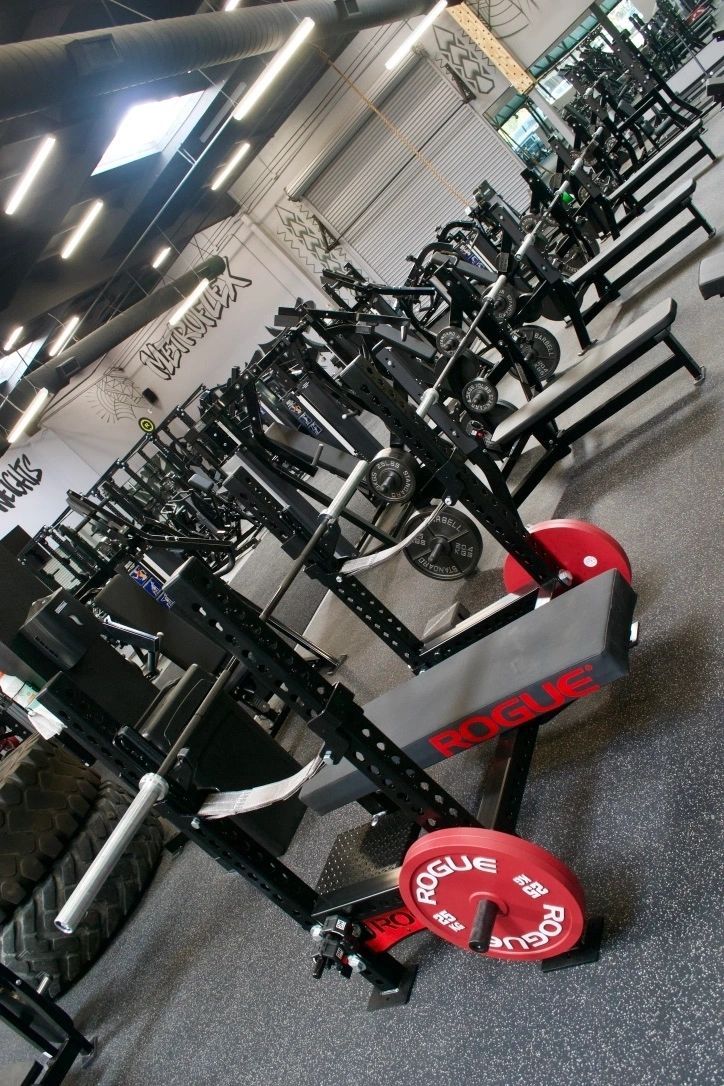
A powerlifting meet looks chaotic from the outside: people warming up, handlers carrying chalk, a scoreboard changing, three judges staring at a bar. Underneath it, the meet is a queue with strict rules. Once you understand the queue, you can follow any meet in the room.
The day is built around flights, attempts and three lifts. Nothing happens early and nothing happens twice.
The flight board is the schedule
Lifters are grouped into flights, usually by opening attempt or bodyweight class. A flight is the group currently lifting. The board lists who is in each flight and which attempt is next. If your name is in the next flight, you are not on deck yet — you are warming up.
Meet directors publish the flight order before lifting starts. Find your name, note your flight, and work backwards from the bar. A warm-up that finishes too early is worse than one that finishes five minutes late.
The total is built from the bottom up. Bank three good lifts before you chase a number.
Three attempts, three lifts
Every lifter gets three attempts on squat, three on bench and three on deadlift. The first attempt is the opener: a weight you can make under pressure. The second is usually a small jump from the first. The third is the one that decides the day.
Attempts must be submitted before your turn, and you can change them within the rules of the competition. A good handler is watching the flight, not the warm-up room, because the two are connected by a clock. If the flight moves fast, the warm-up moves fast.
- Opener: something you have already done in training, on a normal day.
- Second: a controlled jump that keeps the total moving.
- Third: the number you came for, chosen after the second is in the books.
What the three lights mean
Three judges watch every attempt. White means good lift, red means no lift. Two or three white lights and the attempt counts. Two or three red lights and it does not.
The lights are not a judgment of effort. They are a judgment of the technical rules: depth, pauses, commands, lockout. A grinder that technically passes is a good lift. A fast rep that misses a command is not.
The total, and why it matters
Your total is the best successful squat, bench and deadlift added together. A missed third attempt is not a disaster if the first two are in. A missed opener changes the whole plan, because you cannot add to a total with a lift you did not make.
This is why openers matter more than third attempts. The total is built from the bottom up, and the meet rewards lifters who bank three good lifts before they chase a number.
Between attempts
Between attempts you will see lifters eat, tape, lie down, pace, or stare at a wall. That is normal. The clock is the only thing that matters: know how long you have, know where the warm-up area is, and know what plates you need for the next attempt.
If you are handling someone, keep their attempts, their warm-up timing and their next plate load in one place. The plate loader and attempt planner on this site exist for exactly that job.
If you are only watching
Sit where you can see the lights and the board. Cheer after the lights, not during the lift. Do not walk behind the platform while someone is setting up. And stay for the deadlift — the meet is usually decided there.
Put it to work
Meet Attempt Planner
Plan openers, seconds and thirds for all three lifts.